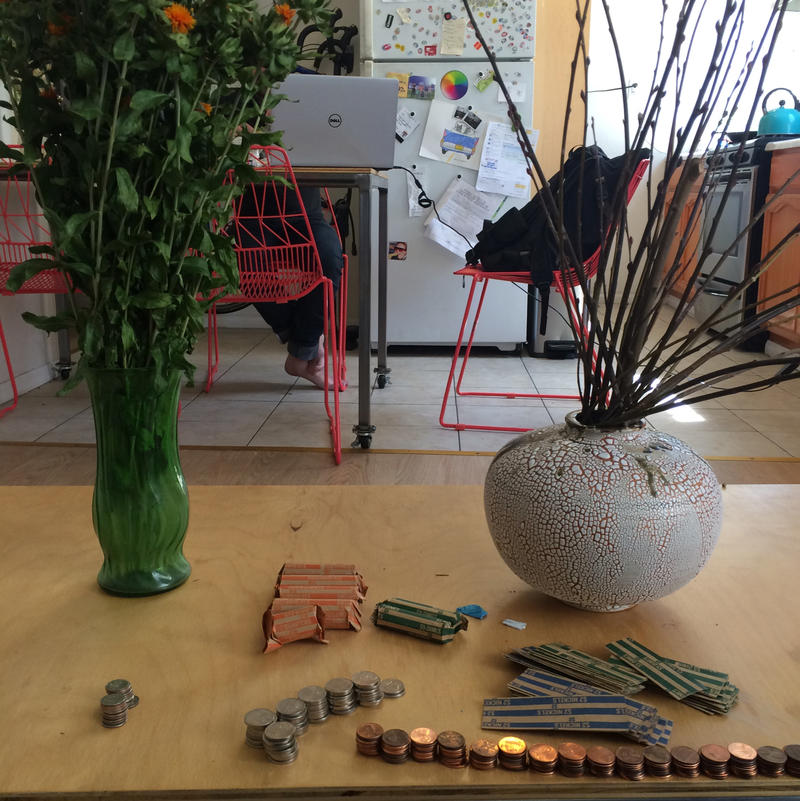
This is an off the cuff review of Minutiae, which is a minimalist photo app of sorts, described as an anti-social media app, a place to save small moments from life, once a day, over a four year timespan. I spontaneously started writing it a couple minutes after one of the impromptu prompts popped up and I took a photo of my camping gear laid out and felt some calm in the chaos.
I initially signed up when it was first out, I think in 2017, though I’m not sure 100%. The premise of the app as I understand it is to record your ‘mundane’ daily moments, unfiltered, as a kind memento of life as it is lived. The way it works is that once a day at a apparently random moment, all over the world, everyone using Minutiae gets an alert to open their app and take a photo of their immediate environment. Technically, if you pay for a subscription ($20 annually), you have up to 5 minutes (I believe?) to respond to the alert. Once the app is opened you have 5 seconds to aim the camera before it takes a photo.
This is the moment I find just some slight nervousness, like, what do i want to save into my digital time capsule? Because I know it will become a part of my personal record, and it will get shared with others too! More on that in a moment. I usually quickly look for something to shoot, almost always aim it away from me and at something interesting in my environment, but often I am at home, or on the subway, on my couch, or in a meeting with friends, or even teaching (i think that happened once).
Once the photo is snapped, it uploads via data or wifi, or with neither, it temporarily saves to the app, and you can swipe left or right to see your own previous photos. Or click a box underneath and it pulls up a random stranger’s photo from somewhere else in the world showing what they just photographed in front of them. Then you have 60 seconds (I believe) to swipe through and look at that stranger’s previous photos and/or your own previous photos.
After 60 seconds the app hides the photo you’ve taken, your past photos, and the stranger you were paired with’s photos. You’ll be able to see your own past photos again the next time you shoot something with the app, at least as much as you can swipe through in 60 seconds, but you will probably never see the stranger’s photos again.
When I signed up the first time I was a grad student at UCLA studying design media arts. I had met the founders of the app through School for Poetic Computation several years earlier, in New York. I was somewhat interested in the idea, but honestly wasn’t sure how motivated I was to use the app. It was only 6 years since I had gotten a smart phone as an adult, and I was already fairly over the problems of these ubiquitous pocket computers and the rise of social media on them. I think I had started an artist account for my art practice on instagram around this time and was already starting to feel the ick.
I liked the artists that made Minutiae, and was interested in trying it out, but wasn’t sure how I felt about the premise, to remember the quotidian moments of life. But I thought, why not give it a try? It was definitely within the realm of similar works of my friends and mentors that I met through my time in NYC working in this space of artist interventions and responses to digital life, surveillance, sous-veillance (a kind of self-surveillance), and society’s rapid inundation with life online years after the rise of cybernetics, early online message boards, MUDs, and such. I also thought of it inline with other experimental social media or anti-social media applications such as Miranda July’s Somebody or Lauren McCarthy’s various projects such as Follower or Lauren, the social media app Minus, and the low battery-dependent phone chatroom app Die with me.
I used Minutiae for about 4 months. Once a day it prompted me for a photo. I took some, and enjoyed it enough. But I was taking photos of my cramped apartment and my random life on the go on my bike and metro commutes around LA. Most of the people I was paired with were other artsy types from New York City, which makes sense as that was the earliest group that likely learned about the app and were given free trials by its founders. But after those first few months, I kind of felt ‘over’ seeing my crappy environment as a poor grad student. Why should I photograph my poor digs and space? Why remember that? And I was also worried about the self-surveillance especially after a partner moved in with me. They didn’t necessarily mind that I always naturally moved to want to photograph them, but maybe that wasn’t a smart idea?? Remember, this was just before the time of the Cambridge Analytica scandal, but warranted fears of advertisers’ sucking up our digital data and metadata were already hyper-present for those of us working in digital media. To be clear, this app has no relation to that, doesn’t sell ads or one’s data/images. This is more a reflection of personal feelings at that time of why I was less interested in engaging with more apps and documenting life. I closed the app, turned off notifications, and didn’t use it for the next many years.
Years later I was living in New York during the pandemic. I had moved back to the east coast from LA about a year after grad school and had joined NEW INC arts incubator. A few things happened that totally changed my mind and got me to try Minutiae again.
I met with one of the founders, Martin Adolfsson, through being part of NEW INC. We talked about our respective projects we were working on. He spoke about the app, about its growth, growing adoption by so many people, and the meaning he found in it. He’d gone deeper into it, and he wanted to transition into making it his job. He also was curious about the idea of doing an ad on my podcast. I hadn’t done ads, so wasn’t sure. But in any case he shared with me some of what made it so compelling to him. My interest was piqued again.
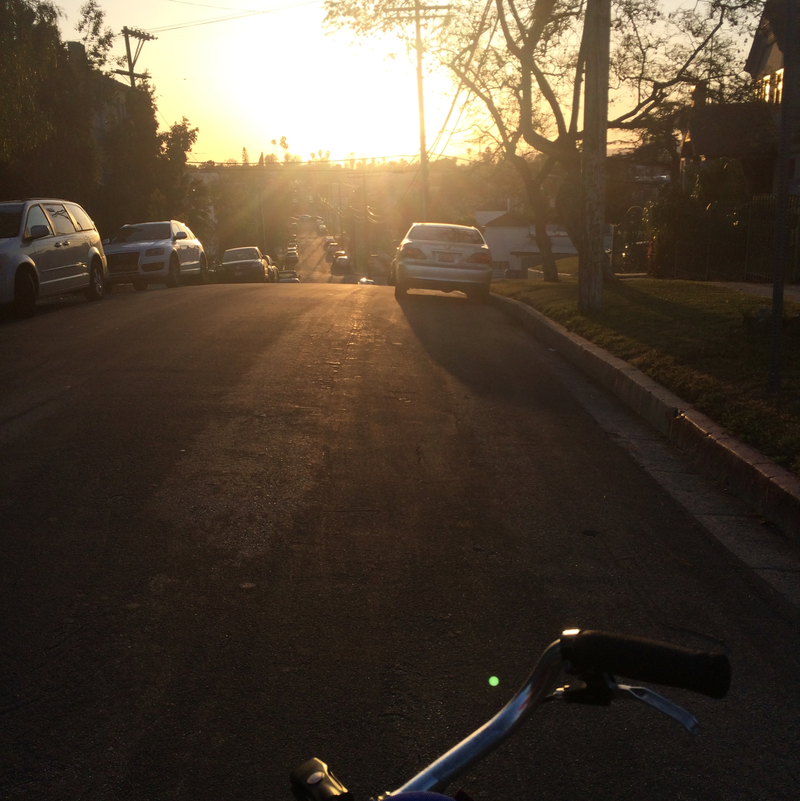
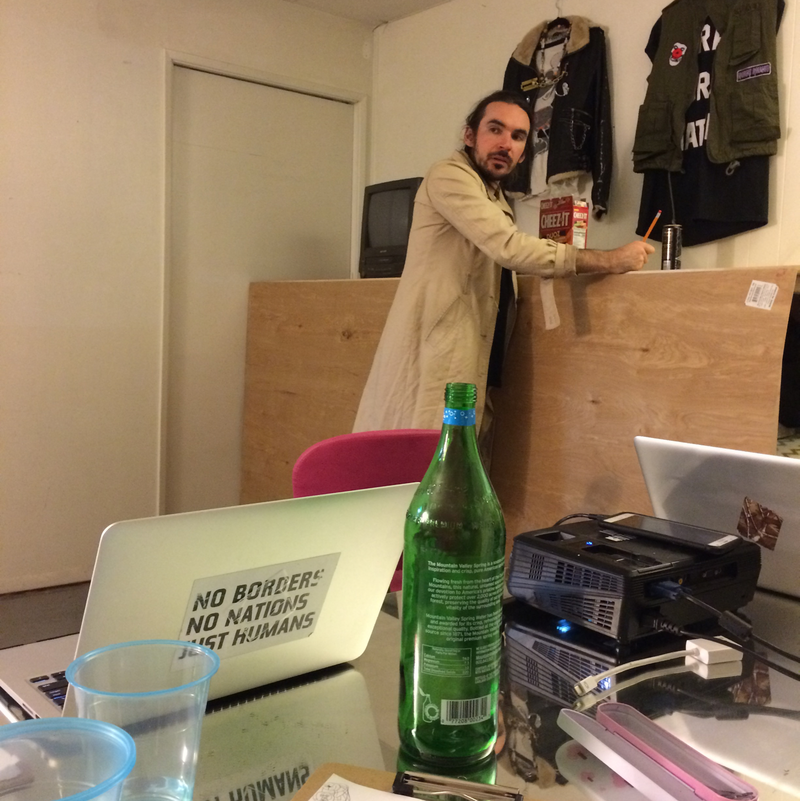
Separately from the above, eight years after signing up for Minutiae initially I got an automated email, with a link to request an archive to download my photos. Now I had only used the app approximately 4 months total, then hadn’t used it for many years. But sure, I was curious what I had photographed. I downloaded the photo dump. And oh wow, I loved seeing my previous life. Of course those small moments of life confusion and economic precarity looked completely different now. I was fascinated by my life back then, and I loved seeing my environment, friends, and life from back then. It’s of course much easier to see life backwards rather than forwards. I absolutely love going through the family shoeboxes of old film photographs of my parents, grandparents and other ancestors. Here was the chance to do a tiny version of that, in a somewhat disorganized fashion, of many small moments of my previous life. It was like a field notes or ethnographic photo collection about me. What had I photographed and why? What were the objects around me? Who was there? What did these things and people mean to me? Could I remember what was going through my mind back then?
I re-downloaded Minutiae again. Why not try it again another few weeks and see what I thought? After all, I’d seen (but not tried myself) BeReal and other apps come and go, and I had enjoyed seeing my previous life documentation come up at the end of many years, so maybe I would give this another shot.
Over the next few weeks, and with an app that had some improvements from when I had used it many years earlier, I found myself eagerly anticipating the camera prompt. And this time, I matched with people generally very different from myself, and from all over the world. From the midwest, from Kuwait, from Korea, from Netherlands and UK, from Morocco, from Mexico, and from my own cities of Berlin and NYC. Selfishly, I’m usually more interested in my own past rather than these strangers, and that’s because disappointingly many people are often watching streaming media on a screen or just driving in their car, two things that feel depressing to me. I know I sound like a grouch but have rarely seen anyone else photograph the book on their lap. But I do find enough times, particularly when people are in school, work or doing hobbies, that I love seeing someone else’s life when it’s compelling or very different from mine.
I’ve now been using the app again for over a year. A couple weeks after I began I even purchased an annual subscription, which gives a couple more minutes to respond to the alert to take a photo. On the year anniversary I was notified that I had the opportunity to purchase a physically printed book with all of the photos I’ve shot from the past year. I’ve ordered it, and I look forward to having this record of my life, with my family, my friends, my teapot, my bed(s), the concerts and bike rides and 2am moments reading by the window long after bedtime when my phone should have been off but I forgot to put it (and me) to sleep.